Feng Shui Garden: Complete Guide to Creating an Outdoor Sanctuary
Transform your outdoor space into a powerful source of positive energy with ancient garden design principles that attract prosperity, health, and inner peace.
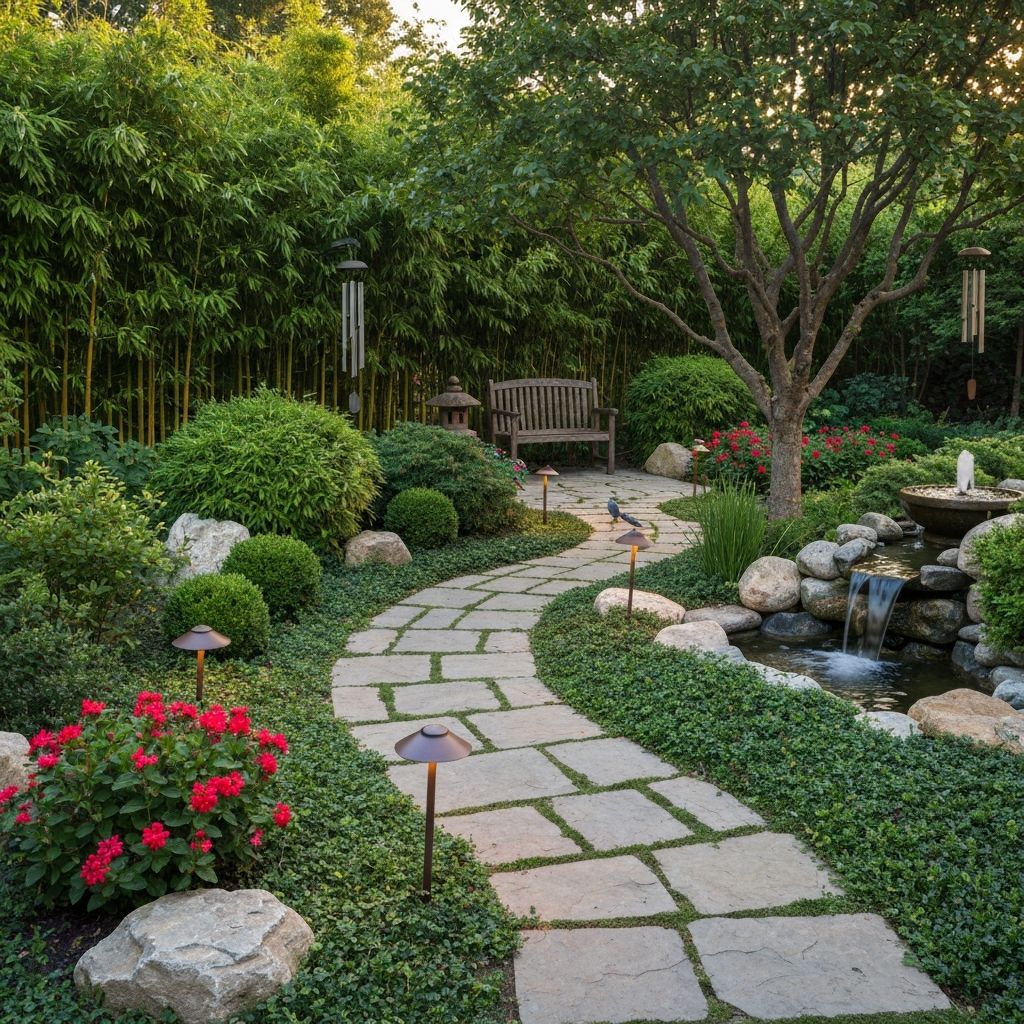
Your garden is the first place chi (life energy) encounters before entering your home. A well-designed Feng Shui garden doesn't just look beautiful — it acts as a powerful filter that transforms incoming energy, attracting abundance and repelling negativity before it reaches your front door.
Whether you have a sprawling backyard or a tiny balcony, applying Feng Shui principles to your outdoor space can dramatically improve the energy quality of your entire property. In this guide, you'll learn how to design pathways that guide chi gently, place water features for maximum wealth activation, balance the five elements outdoors, and choose plants that amplify positive energy.
Map Your Garden's Energy with FengShui Hero
Our app helps you apply the bagua map to your outdoor space for perfect element placement.
Get the App FreeWhy Your Garden Is the Most Important Feng Shui Space
In traditional Feng Shui, the exterior of your property is considered even more important than the interior. Your garden is where chi from the universe first makes contact with your personal space. A garden with good Feng Shui acts as a chi collector — gathering, slowing, and refining energy before it enters your home.
Think of your garden as the lungs of your home. Just as lungs filter air, your garden filters energy. Stagnant, cluttered, or neglected outdoor spaces send stale, depleted chi into your home, affecting everything from your sleep quality to your financial prosperity.
The Golden Rule: Curved Pathways Over Straight Lines
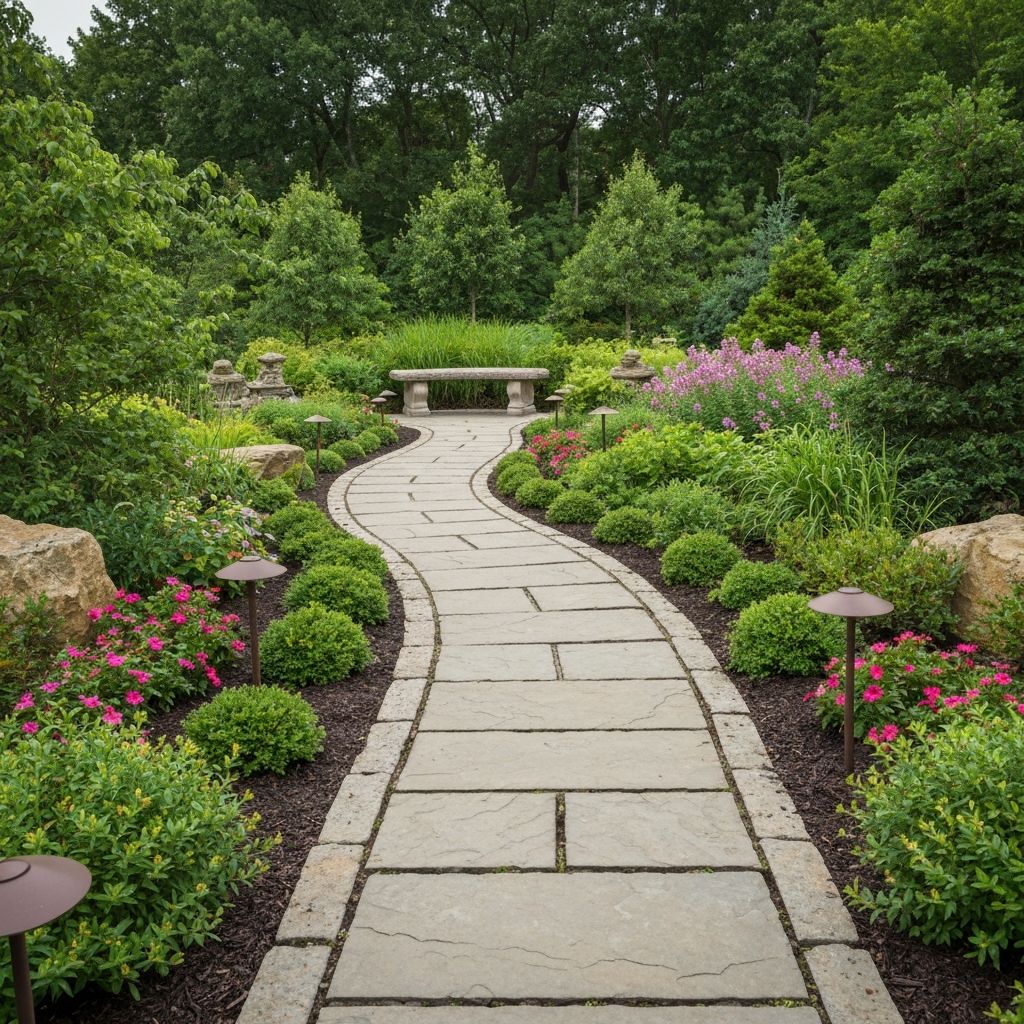
The single most impactful change you can make to any outdoor space is eliminating straight pathways. In Feng Shui, straight lines create "sha chi" — rushing, aggressive energy that acts like poison arrows. This is especially harmful when a straight path points directly at your front door.
Curved, meandering pathways mimic the natural flow of rivers and streams, allowing chi to travel gently through your garden, nourishing every plant, stone, and element it passes. Even a slight curve in a walkway transforms the energy from aggressive to nurturing.
- S-curves — The ideal pathway shape, mimicking natural water flow
- Stepping stones — Natural, irregular placement slows energy beautifully
- Focal points — Every curve should reveal something beautiful (plant, sculpture, bench)
- Width variation — Pathways that widen and narrow create dynamic energy
Water Features: Your Garden's Wealth Activator
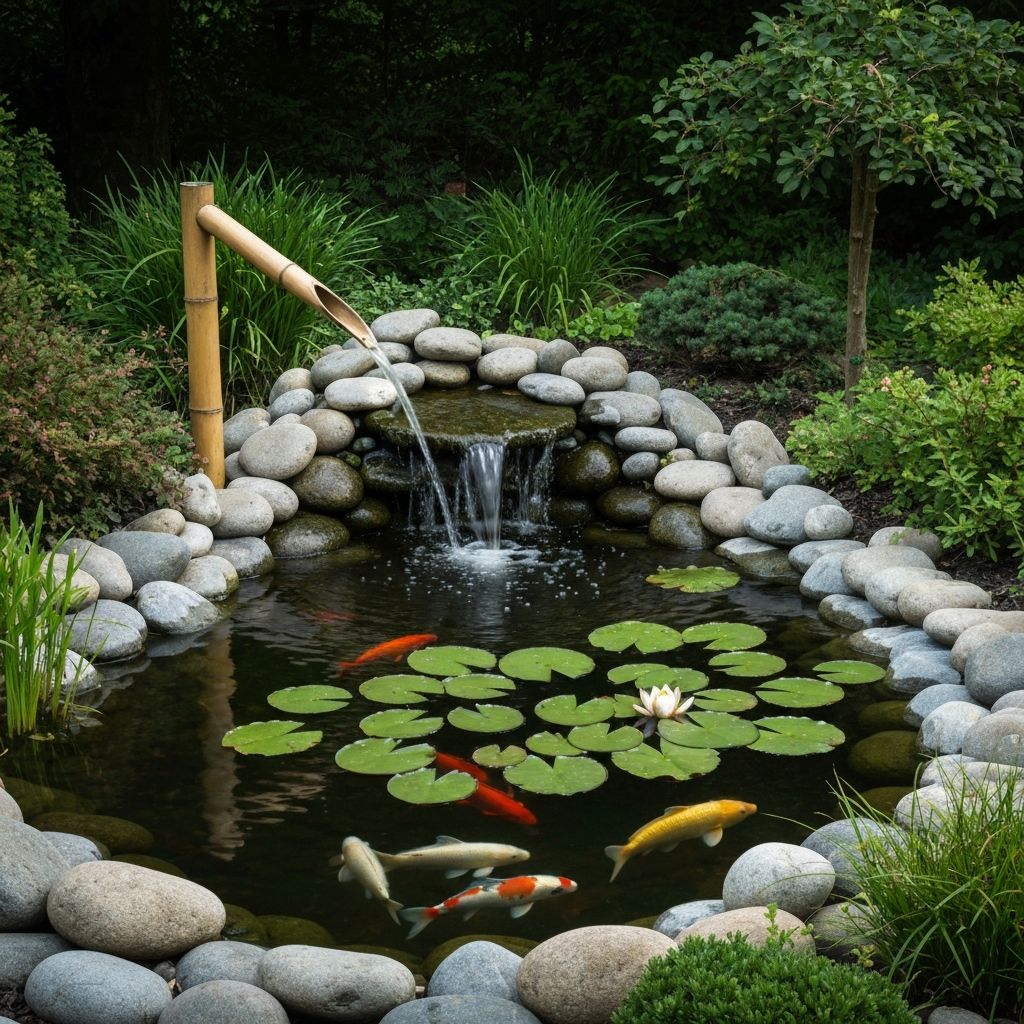
Water is the most powerful element for attracting wealth and prosperity in Feng Shui. A properly placed water feature in your garden can significantly amplify the flow of abundance into your life. The key rules are simple but critical:
- Direction — Water must flow TOWARD your home, never away from it
- Placement — North (career), east (health), or southeast (wealth) sectors
- Movement — Flowing water is essential; stagnant water attracts negative energy
- Cleanliness — Keep water crystal clear; murky water represents confused finances
- Scale — Proportional to your garden; an oversized feature overwhelms the space
Find Your Garden's Wealth Zone
Use FengShui Hero to identify the perfect placement for water features and prosperity activators.
Download Free TodayBalancing the Five Elements Outdoors
A truly harmonious garden represents all five elements of Feng Shui in balance. Each element brings unique energy to your outdoor space:
Wood Element
Trees, shrubs, wooden fences, pergolas, bamboo. Represents growth, vitality, and new beginnings. The dominant element in most gardens.
Fire Element
Red/orange/yellow flowers, outdoor lighting, fire pit, candles, triangular shapes. Represents passion, recognition, and transformation.
Earth Element
Stones, terracotta pots, clay sculptures, low flat surfaces, square planters. Represents stability, nourishment, and grounding.
Metal Element
Wind chimes, metal planters, iron gates, white flowers, round shapes. Represents clarity, precision, and completion.
Water Element
Fountains, ponds, birdbaths, dark stones, flowing shapes. Represents wisdom, abundance, and career advancement. Place in north, east, or southeast sectors.
Best Plants for a Feng Shui Garden
Plants are the backbone of any Feng Shui garden. The right plants attract wealth and positive energy, while the wrong ones can create sha chi. Here are the top recommendations:
- Bamboo — Represents resilience, flexibility, and rapid growth. Perfect for privacy screens.
- Peonies — The queen of Feng Shui flowers, symbolizing love, honor, and wealth.
- Citrus trees — Oranges and lemons represent abundance and good fortune.
- Jasmine — Attracts romance and positive energy with its intoxicating fragrance.
- Lavender — Promotes calm, healing, and emotional wellness.
- Lotus — The ultimate symbol of spiritual growth and enlightenment.
Garden Feng Shui Mistakes to Avoid
Even beautiful gardens can harbor bad Feng Shui. Watch out for these common mistakes:
- Straight paths to front door — Creates poison arrows directing sha chi at your entrance
- Dead or dying plants — Represent decay and drain energy from your space
- Stagnant water — Breeds negative energy and represents financial stagnation
- Overgrown, neglected areas — Block chi flow and create heavy, stuck energy
- Sharp-pointed plants at entrance — Cactus, yucca, and agave create negative energy at doorways
- Broken furniture or decor — Signals neglect and attracts low-quality energy
Feng Shui for Small Outdoor Spaces
Don't have a large garden? Feng Shui principles apply equally well to balconies, patios, and tiny courtyards. Even renters can create powerful outdoor energy:
- Use container plants to represent the wood element
- A tabletop fountain provides water element energy
- Wind chimes add metal element and pleasant sound
- Candles or a small lantern bring fire element
- A stone or terracotta pot grounds with earth element
- Use a mirror to visually expand the space and double plant energy
Frequently Asked Questions
What is the most important Feng Shui principle for gardens?
The most important principle is creating curved, meandering pathways rather than straight lines. Curves allow chi to flow gently, nourishing everything in the garden.
Where should a water feature be placed in a Feng Shui garden?
In the north (career), east (health/family), or southeast (wealth) areas. Water should always flow toward your home to symbolize wealth coming to you.
What are the best Feng Shui garden plants?
Bamboo, peonies, jade plants, lotus, citrus trees, and jasmine are all excellent choices that amplify positive garden energy.
How do you balance the five elements in a garden?
Include wood (plants/trees), fire (red flowers/lighting), earth (stones/terracotta), metal (wind chimes/planters), and water (fountains/ponds) without any single element dominating.
Is Feng Shui garden design good for small spaces?
Absolutely. Use container plants, tabletop fountains, wind chimes, candles, and mirrors to apply all five elements even on a small balcony or patio.
What garden features bring bad Feng Shui?
Straight pathways pointing at the front door, stagnant water, dead plants, overgrown areas, sharp-pointed plants at entrances, and broken garden furniture all create negative energy.
Design Your Dream Feng Shui Garden
FengShui Hero gives you personalized garden layout recommendations based on your property's orientation.
Start Your Garden Transformation