Feng Shui Compass (Luo Pan): Complete Guide to Reading & Using
The Feng Shui compass, or Luo Pan, is the master practitioner's most important tool. Learn how to use directional energy to transform your space.
Ready to apply precise Feng Shui compass readings to your space? The Feng Shui Hero app uses your phone's compass to instantly analyze your home's directional energy and provide personalized recommendations.
What Is a Feng Shui Compass (Luo Pan)?
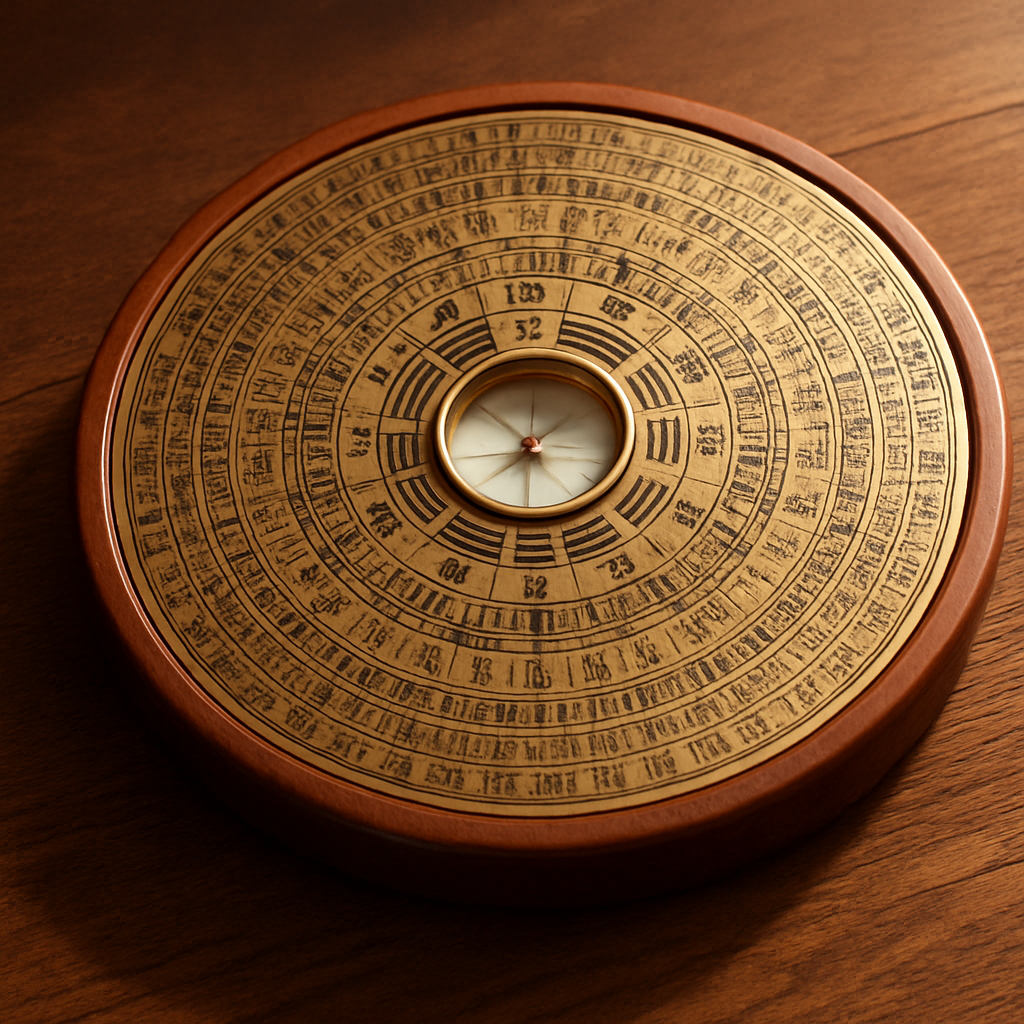
The Luo Pan is a traditional Chinese compass used in Feng Shui to determine precise directions and analyze the energy flow of a space. While a basic compass shows cardinal directions, a traditional Luo Pan contains up to 40 concentric rings with information about the Bagua, the Five Elements, the I Ching trigrams, and much more.
For home Feng Shui, you don't need a professional Luo Pan. A simple compass or smartphone app provides the directional readings you need to apply the Bagua map accurately to your space.
The 8 Compass Directions in Feng Shui
Feng Shui divides space into 8 directions, each associated with specific life areas, elements, and energies:
- North (337.5° - 22.5°) — Career, life path. Element: Water. Colors: black, dark blue.
- Northeast (22.5° - 67.5°) — Knowledge, self-cultivation. Element: Earth. Colors: beige, tan.
- East (67.5° - 112.5°) — Family, health. Element: Wood. Colors: green, teal.
- Southeast (112.5° - 157.5°) — Wealth, abundance. Element: Wood. Colors: purple, green.
- South (157.5° - 202.5°) — Fame, reputation. Element: Fire. Colors: red, orange.
- Southwest (202.5° - 247.5°) — Love, relationships. Element: Earth. Colors: pink, terracotta.
- West (247.5° - 292.5°) — Children, creativity. Element: Metal. Colors: white, gray.
- Northwest (292.5° - 337.5°) — Helpful people, travel. Element: Metal. Colors: silver, gold.
How to Find Your Home's Facing Direction
Your home's facing direction determines how you overlay the Bagua map and which compass-based enhancements to apply:
- Stand at your front door — Position yourself inside the threshold, facing outward toward the street.
- Hold your compass level — Keep the compass flat and steady, away from metal door frames.
- Note the direction you face — This is your home's facing direction. The opposite is your sitting direction.
- Take multiple readings — Verify by taking readings from different points near the entrance.
Applying Compass Directions to the Bagua
Once you know your facing direction, you can apply the compass Bagua to your floor plan. This differs from the BTB (Black Sect) method which aligns the Bagua based on the front door position rather than compass direction.
The compass method places career (North) at the actual magnetic north of your home, wealth (Southeast) at the actual southeast corner, and so on. This provides consistent results regardless of where your door is located.
Learn more about applying the Bagua in our complete Bagua map guide.
Enhancing Each Compass Sector
Each compass direction responds to specific elements and colors. Here's how to enhance each sector:
- North (Career) — Add a water feature or images of water. Use black and blue accents.
- South (Fame) — Place candles or uplighting. Use red and triangular shapes.
- East (Health) — Add healthy plants and green colors. Display family photos here.
- West (Creativity) — Use metal accents and white colors. Display children's artwork.
- Southeast (Wealth) — Activate your wealth corner with purple, gold, and abundance symbols.
- Southwest (Love) — Place pairs of objects and use earth element colors like pink and terracotta.
Get Instant Compass Readings
Skip the manual calculations. The Feng Shui Hero app uses your phone's compass to automatically determine your home's facing direction and overlay the Bagua map for personalized recommendations.
Download Feng Shui HeroCommon Compass Reading Mistakes
- Standing near metal — Door frames, appliances, and electronics distort compass readings.
- Confusing facing and sitting — Your facing direction is where you look when exiting; sitting is the opposite.
- Using an uncalibrated phone — Calibrate your smartphone compass before taking readings.
- Tilting the compass — Always hold the compass perfectly level for accurate readings.
Frequently Asked Questions
Do I need a traditional Luo Pan or can I use a smartphone compass?
A smartphone compass works well for basic home Feng Shui. Traditional Luo Pans contain additional rings for advanced analysis, but a regular compass or phone app is sufficient for determining your home's facing direction and applying the Bagua map.
How do I find my home's facing direction?
Stand inside your front door facing outward. Hold your compass level and note the direction you're facing. This is your home's facing direction. The opposite direction is your sitting direction. These two readings form the basis of compass school Feng Shui.
What's the difference between compass school and form school Feng Shui?
Form school focuses on the physical environment - landforms, water, buildings, and interior layout. Compass school uses precise directional measurements to determine auspicious and inauspicious sectors. Most practitioners combine both approaches for comprehensive analysis.
Why do my compass readings vary in different parts of my home?
Electronic devices, metal objects, and electrical wiring can interfere with compass readings. Always take multiple readings away from appliances and metal. Stand in the center of your home or at the front door threshold for the most accurate measurement.
How often should I recalculate my home's Feng Shui directions?
Your home's compass directions remain constant. However, annual flying stars change each year, so serious practitioners update their Feng Shui adjustments annually. The basic Bagua orientation based on compass direction stays the same.
What if my home faces between two directions?
If your home faces exactly between two cardinal or ordinal directions, it sits on a boundary line. Take multiple readings to confirm. Some practitioners use the dominant direction, while others consider influences from both adjacent sectors.